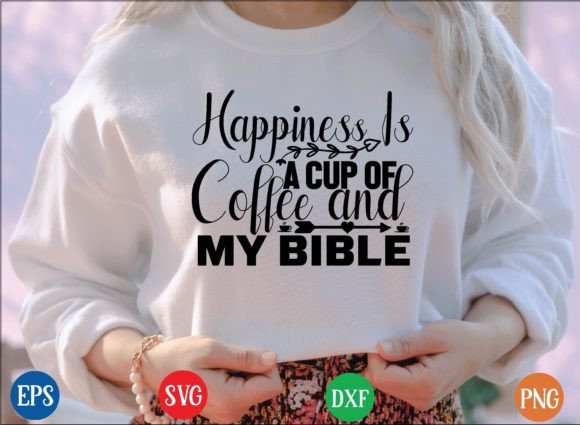
Happiness Is a Cup of Coffee and My Bible T-Shirt Design
Any digital product creator scanning Etsy or Creative Fabrica for the next niche graphic knows the power of a well‑targeted phrase. Happiness Is a Cup of Coffee and My Bible landed in my review queue just as I was mapping out a faith‑inspired everyday collection for a print‑on‑demand test run. The asset is an instant‑download cutting file, compatible with Cricut, Silhouette, and similar machines, and it’s marketed as suitable for men’s products. From a pure shop‑building perspective, that combination of coffee culture and scripture‑centered living immediately felt like a repeatable, gift‑friendly hook.
First Impressions from a Seller’s Point of View
Opening the download, I wasn’t expecting a full illustration set—it’s a typographic graphic design asset that leans into a warm, slightly rustic personality. The phrase “Happiness Is a Cup of Coffee and My Bible” reads like a personal mantra, and the lettering strikes a balance between casual script and clean, readable lines. Visually, it sits in that cozy, everyday‑faith niche that attracts coffee‑loving Christians, early‑morning devotional readers, and anyone looking for a subtle statement piece. The mood is approachable, not overly ornate, and that makes it highly adaptable across both male and female product lines.
When I imagine the buyer, I see several overlapping audiences: the Etsy shopper hunting for a unique men’s gift, the Cricut crafter making a custom mug for a church group, the blogger designing a social‑media graphic for a Monday morning inspiration post, and the small‑business owner who wants a consistent brand identity around faith and simplicity. That broad appeal is what makes a commercial design like this worth testing across multiple product types.
Testing the SVG for Cutting Machines
As a Cricut project facilitator, my first practical step is always to upload the SVG into Design Space and examine the cut paths. The file arrived cleanly layered, with manageable node counts—no overly complex contours that would turn a weeding session into a headache. Small text elements can be risky on a cutting mat, especially if the font has thin upstrokes or tight loops. In this case, the lettering is bold enough to cut smoothly at a 6‑inch width, which is a solid baseline for a unisex shirt graphic. I also tested on a Silhouette Cameo with standard vinyl settings; the result held detail well, and the transfer tape lifted cleanly without tearing the word “Bible.”
One note for producers who sell SVG design downloads: buyers will appreciate a quick‑reference guide on recommended minimum size. For this design, I’d suggest 4 inches for a front‑pocket placement and at least 8 inches for a full‑back or tote‑bag graphic. Including that tip in the file folder increases perceived value and reduces customer complaints about tiny cuts.
Translating the Graphic into T‑Shirt and Merchandise Mockups
Moving from cut file to product mockup is where a seller’s editing eye really matters. I dropped the PNG design version onto a heather‑gray unisex tee, a classic navy mug, and a natural canvas tote. The high‑contrast black version of the graphic read instantly on the light backgrounds. I also tested a white‑only variant on a dark charcoal shirt, and the message popped with the same warmth you’d want from a t‑shirt design aimed at a morning‑coffee audience.
For print‑on‑demand platforms like Printful or Redbubble, the PNG file’s transparency was flawless, and the resolution held up at 300 DPI on a 12×16 inch print area. That’s crucial when you’re creating a digital download for a creative marketplace listing—you need the mockup to look sharp from thumbnail to zoom. I experimented with mockup scenes featuring a man holding a Bible and a steaming mug, and the layout felt instantly cohesive. The graphic’s typography centers the eye, so it works well even when the product preview is small on a mobile screen.
Expanding the Asset into Printables and Digital Products
Though the product is categorized primarily as a t‑shirt design, the phrase “Happiness Is a Cup of Coffee and My Bible” has strong legs as a printable design. I framed it as an 8×10 wall‑art print, adding a subtle coffee‑bean watermark behind the text. The result was a simple, sellable decor piece that could sit comfortably in a kitchen, home office, or reading nook. This is a low‑effort but high‑value product variant: bundle the graphic design asset with a matching 5×7 card and a small sticker, and you’ve got a gift‑ready set for Mother’s Day or Father’s Day.
For Canva template sellers, the PNG design can be layered into social‑media quote graphics, sermon‑note backgrounds, or blog‑post headers. The typography is strong enough to stand alone on a square Instagram post, and the message resonates with the growing “faith and lifestyle” content niche. I’d also consider using it as a clipart element within a larger digital scrapbooking kit, especially for journaling spreads that pair coffee‑themed backgrounds with devotional prompts.
Building a Cohesive Product Bundle Around the Theme
One of the smartest moves a digital product creator can make is to stop selling a single file and start selling a design bundle. I settled on a “Morning Grace” collection concept. The core asset—Happiness Is a Cup of Coffee and My Bible—would anchor the bundle, accompanied by a coordinating silhouette of a coffee cup, a small cross icon, and a subtle “Rise & Shine” script. Together, they form a complete clipart and illustration set that customers can mix and match for tumbler wraps, mug designs, tote bag prints, and greeting cards.
When previewing the bundle mockup, I used the main phrase on a t‑shirt design, the coffee cup on a sticker design, and the cross icon on a packaging design tag. The consistent style elevated the entire listing, giving the impression of a small business branding kit rather than a single slapped‑on graphic. Bundles like this often perform better in search because they surface for multiple keywords, from “Christian coffee svg” to “Bible verse shirt bundle” to “Cricut faith project.”
Where the Design Shines—and Where to Use Caution
After testing across a dozen mockup scenarios, the strongest use cases became clear. This graphic design asset excels on large product previews, themed bundles, decorative layouts, and printable products where the text is the hero. It’s ideal for merchandise graphics, social media promos, and digital download listings that rely on a clear, emotional hook. Click‑through potential increases when the mockup tells a story—a man in a quiet corner with coffee and a worn‑in Bible, for instance.
However, there are scenarios where the same strengths can become weaknesses. On tiny sticker details—say, a 1.5‑inch planner sticker—the text becomes illegible and the cut lines risk clumping. The design also needs careful handling on overly complex layouts or crowded thumbnails; the message gets lost when competing with too many surrounding elements. Dark backgrounds require the seller to provide a white‑knockout version, otherwise the transparent PNG can vanish. And for low‑resolution print products like cheap iron‑on transfers, the fine serifs may blur. Always test a print sample before committing to a bulk order.
Another caution point: the cutting path for the word “Bible” includes a few tight curves. I’d recommend that sellers who offer this as a Cricut project include a brief note about using a fresh blade and a slower cut speed for intricate letters. That small addition can drastically reduce negative reviews from disappointed crafters.
Seller Preparation Checklist Before Listing
Before you publish a product page featuring Happiness Is a Cup of Coffee and My Bible, run through the same checks I follow for every digital product in my shop. It’s the difference between a one‑off sale and a repeat customer.
- Test the design on real mockups—not just a white background. Preview it as a marketplace thumbnail on a phone screen to see if the text remains readable.
- Check how it looks on white and dark backgrounds. Provide a standard black version and a white or light‑colored option for dark apparel.
- Print a sample at actual size on your home printer or a local shop, especially if you plan to sell it as a printable wall art. Colors can shift.
- Verify PNG transparency by layering the file over a patterned background in Photoshop or Canva. Any stray pixels will show instantly.
- Inspect SVG cut quality by running a test cut on cardstock. Look for ragged edges, overlapping paths, or un‑welded letters.
- Confirm the file resolution is at least 300 DPI for printables and 150 DPI for large‑format sublimation panels.
- Organize the download folder clearly: name files with descriptive titles like “Happiness‑Coffee‑Bible‑SVG‑for‑Cricut” and separate commercial‑use terms into a prominent PDF.
- Pair the graphic with a few complementary fonts in your listing images—a serif font for a classic Bible verse pairing, a script font for a softer devotional look, or a handwritten font to suggest a personal journal feel. This shows versatility and helps buyers visualize the design in their own projects.
Commercial Licensing and Print‑on‑Demand Considerations
Nothing stalls a seller’s momentum faster than a licensing dispute. The product description for Happiness Is a Cup of Coffee and My Bible indicates it’s suitable for commercial use, but I always dig deeper. Before creating finished t‑shirt designs or mug designs for sale, check the commercial license terms. Does it allow unlimited print‑on‑demand runs? Can you use the design on products you sell on Etsy or Amazon? Is the license valid for a creative marketplace like Creative Fabrica’s print‑on‑demand section? I’ve learned to keep a screenshot of the license page in my project folder for quick reference.
If you’re a Canva template seller, verify that the license covers redistribution of the design as part of a template where the graphic design asset is flattened into a JPG or PDF. Many POD‑friendly licenses permit this, but not all. For social media graphics or blog graphics, commercial use is usually straightforward; still, I prefer to add a credit line in the file description only if the license requires it. Transparency with your customers builds trust and protects your small business branding.
Niche Appeal and Seasonal Selling Opportunities
One of the quieter strengths of Happiness Is a Cup of Coffee and My Bible is its seasonal flexibility. While it isn’t a Christmas or Easter graphic per se, it easily slots into gift‑giving seasons. I see Father’s Day promotions featuring the design on a dad‑focused mockup, Mother’s Day bundles with a softer color palette, and even New Year’s resolution campaigns centered on devotional habits. The coffee‑and‑Bible theme is also highly relevant for back‑to‑school season for teachers, youth group leaders, and campus ministry organizers.
For the printable design side, a “Scripture & Sip” journal set could combine this graphic with lined pages and a few additional clipart coffee icons. List it as a planner‑compatible digital download and you’ve suddenly tapped into the faith‑planner community. That’s the kind of cross‑niche thinking that keeps an Etsy product visible across multiple search terms, from “Christian coffee printable” to “Bible study sticker” to “Cricut faith bundle.”
How the Graphic Supports a Professional Product Presentation
Beyond the product itself, the way you present Happiness Is a Cup of Coffee and My Bible in your shop can elevate your entire brand. When I mock up a new listing, I pay close attention to visual hierarchy. The graphic should be the clear focal point, with lifestyle props that reinforce the message—a worn leather Bible, a steaming mug, soft morning light. This consistent visual storytelling builds customer trust and raises the perceived value of the design. A well‑crafted mockup can make a $4 digital download feel like a premium product.
For packaging design and thank‑you inserts, consider using a small, simplified version of the graphic as a brand stamp. It reinforces the handmade business feel and encourages repeat purchases. With a design asset like this, the typography is so central that it also works as a social media banner or a blog‑post feature image, extending your brand’s reach without needing additional graphics.
Final Practical Notes for the Online Shop
If you’re weighing whether to add Happiness Is a Cup of Coffee and My Bible to your product lineup, treat it as a staple rather than a trend. The coffee‑and‑faith niche isn’t a flash‑in‑the‑pan; it’s a steady, everyday category that resonates with real people. Test it first on a few product types—a t‑shirt design, a mug, and a printable wall art—and observe the response. Pay attention to the search terms buyers use to find it, and consider building a design bundle around it to increase average order value.
From a technical standpoint, the file I reviewed was clean, cut‑ready, and versatile enough for multiple design assets applications. The phrase “Happiness Is a Cup of Coffee and My Bible” carries an emotional hook that works in both digital download and physical merchandise formats. With careful mockup testing, a clear commercial license, and a bit of creative bundling, this graphic design asset can become a reliable, repeatable seller for a small business branding strategy that values authenticity over fleeting trends.