Leopard Cheetah Libbey Glass Can Embroidery Review
First Impression: Wild, Warm, and Surprisingly Versatile
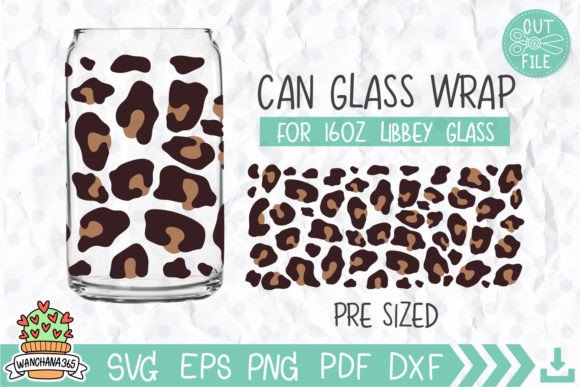
When I opened the Leopard Cheetah Libbey Glass Can design file, my first thought was how naturally it fits into the current handmade market. Animal prints cycle through trends constantly, but leopard and cheetah patterns have a staying power that few other motifs can match. This design carries that timeless warmth without feeling costume-like or overly loud. The organic spotting, the natural flow of the pattern, and the way the shapes cluster and scatter create a rhythm that feels alive on screen. I immediately started imagining how it would translate to thread and fabric, not just how it looks as a flat graphic.
As someone who tests embroidery designs before using them on client projects or listing finished goods in my shop, I look for a few things right away. Does the design have breathing room, or does it feel cramped? Will the details read clearly from a distance? Does the layout work with the natural drape and movement of fabric? The Leopard Cheetah Libbey Glass Can pattern passes those early checks with a confident nod. The spotting is distinct enough to hold its own in stitch form, and the overall composition leaves space for the eye to rest, which matters more than many new designers realize.
Where This Design Truly Belongs
I often say that a design finds its home, not the other way around. You cannot force a pattern onto a product it was never meant for. With the Leopard Cheetah Libbey Glass Can design, the natural home is clear: products that celebrate texture, warmth, and a touch of personality. Tote bags, canvas pouches, denim jackets, and structured aprons come to mind first. The pattern has an earthy, grounded quality that pairs beautifully with natural fabrics like linen, cotton canvas, and even soft twill.
I pictured a custom embroidered tote bag as my test case. A medium-weight natural cotton tote, unbleached, with the leopard cheetah pattern stitched across the front panel in warm browns and golden ochres. The visual weight of the design would anchor the bag nicely without overwhelming the simple shape. For a boutique product line, this kind of design instantly elevates a plain accessory into something that feels curated and intentional. Customers browsing at a craft fair or scrolling through Etsy listings respond to that kind of confident simplicity.
How the Pattern Performs in Real Embroidery Work
When thinking about embroidery execution, the leopard cheetah motif brings both advantages and challenges. The organic nature of the spots means that slight registration shifts, which can ruin geometric or highly symmetrical designs, are much more forgiving here. Slight variations in stitch placement actually enhance the natural, handcrafted feel rather than detract from it. That is a significant practical advantage for anyone running a production workflow, especially on a single-needle machine where perfect alignment is never guaranteed.
The Leopard Cheetah Libbey Glass Can pattern works well as a fill stitch interpretation, where the spots are rendered in satin stitch against a lighter fill background, or as a simpler silhouette-style running stitch for a more subtle, tone-on-tone effect. Both approaches have their place. For a soft sweatshirt, I would lean toward a low-density fill to keep the fabric drape intact. For a structured tote or patch, a denser satin stitch on the spots would give that satisfying tactile quality that buyers love to touch.
Thread Color Choices That Make the Design Shine
Thread selection makes or breaks an animal print embroidery design. With the leopard cheetah pattern, I recommend leaning into warm, natural tones. Think burnt sienna, deep amber, espresso brown, warm ochre, and soft cream. Avoid pure black unless you are going for a high-contrast, graphic look. Pure black can flatten the organic warmth and make the pattern feel harsh against fabric. Instead, a very dark brown reads as black to the eye but keeps the overall warmth intact.
For boutique products targeting a softer aesthetic, consider dusty rose, terracotta, or even muted sage green as the background fabric, with the spots stitched in tonal shades. That kind of color story photographs beautifully for product listings and creates a cohesive brand look across a collection.
Fabric and Texture Considerations
Fabrics with too much texture, like heavy terry cloth or loosely woven burlap, will swallow the finer details of the spots. The design needs a reasonably smooth surface to read clearly. Medium-weight cotton, canvas, soft denim, and quality linen all work well. On stretchy fabrics like jersey or ribbed knit, use a firm cutaway stabilizer and consider reducing the stitch density slightly so the design moves with the fabric rather than fighting against it.
For baby items, which is a category I often consider for animal prints, the Leopard Cheetah Libbey Glass Can design works beautifully on a soft cotton onesie or a nursery pillow cover. The pattern feels playful and warm without being overly gendered, which broadens the customer appeal. Parents shopping for nursery decor or baby shower gifts often gravitate toward animal motifs that feel gentle rather than aggressive, and this design hits that sweet spot.
A Real Project Scenario: The Craft Fair Tote
Let me walk through a realistic scenario. A small shop owner is preparing inventory for a spring craft fair. She wants a signature product that feels cohesive, memorable, and easy to produce in batches. She chooses a natural cotton tote bag, stitches the Leopard Cheetah Libbey Glass Can pattern across the front, and pairs it with a simple leather-look strap detail. The stitching is clean, the colors are warm, and the finished product looks like something you would find in a carefully curated boutique.
At the fair, customers pick up the tote, run their fingers over the embroidered spots, and comment on how unique it feels. The pattern sparks conversation. Someone mentions it reminds them of a favorite scarf or a vintage coat. The emotional connection is immediate, and that is what sells handmade products. No amount of generic floral designs can compete with a pattern that triggers a personal memory or a feeling of warmth.
This is the kind of reaction I anticipate from the Leopard Cheetah Libbey Glass Can design when used thoughtfully. It carries a quiet confidence that does not need to shout for attention, yet it draws the eye naturally across a product display table or a screen full of competing listings.
Where You Should Use Extra Caution
No design works everywhere, and honest evaluation means pointing out the limitations. The leopard cheetah pattern, by its nature, includes many individual shape elements. On very small hoop sizes, those spots can become too dense or too tiny to stitch cleanly. I would avoid using this design on anything smaller than a 4x4 inch embroidery area, and even then, I would test carefully on scrap fabric first. Below that size, the spots risk losing definition or creating thread buildup issues.
Curved surfaces like baseball caps pose a different challenge. The pattern is designed as a full wrap, and mapping it onto a curved, structured surface requires careful placement and likely some design editing. If you are stitching on caps, consider isolating a section of the pattern rather than using the full wrap layout. A smaller cluster of spots on the cap front or side panel often looks more intentional than trying to force the full design onto a surface it was not shaped for.
Dark fabrics also require a test run. If the design includes dark spotting against a light background, the contrast works beautifully on natural or light fabrics. On a black or charcoal fabric, you may need to invert the color logic or add a light underlay to keep the pattern visible. Always test on your actual project fabric before committing to a production run.
Practical Designer Notes for a Smooth Workflow
Before you load the Leopard Cheetah Libbey Glass Can design onto your machine and start stitching, here are the steps I recommend based on my own workflow:
- Test the design on a scrap of the exact fabric you plan to use, with the same stabilizer and thread colors.
- Check thread tension on the satin stitch spots. Dense spots can pull if tension is even slightly off.
- Review the stitch density in your software preview. If the spots look too heavy, reduce density slightly before stitching.
- Compare the design on light and dark fabric backgrounds to see how the contrast shifts.
- Run a black-and-white printout of the design to evaluate the shape readability without color influence.
- Confirm the hoop size fits comfortably with at least half an inch of clearance on all sides.
- Use a quality cutaway stabilizer for garments and a tear-away for structured bags or flat items.
- Inspect the small spot details after the first test stitch. If any spots are under 1mm, they may not stitch cleanly.
These are not optional steps if you are selling finished products. Customers notice inconsistent stitching, and a single poorly executed piece can damage your brand reputation faster than a dozen good ones can build it. Take the time to dial in the settings before you list anything in your shop.
Commercial Use and Licensing Awareness
For Etsy sellers, craft business owners, and digital product creators, the licensing question is always top of mind. The Leopard Cheetah Libbey Glass Can design falls under the Graphics category, which means it is a digital asset intended for use in various projects. Before you stitch this design onto products for sale or include it in a digital product bundle, confirm the specific license terms with the original creator. Does the license allow commercial use on physical finished products? Can you sell the embroidered item, or is the file limited to personal projects? These questions matter, and assuming permission without checking can lead to serious problems down the line.
If you are creating printable mockups or digital design previews that include this pattern, the same licensing caution applies. The fact that the design is listed under Crafts suggests it is intended for handmade and creative projects, but the exact scope of use should always be verified directly.
Customer Appeal and Marketability
From a selling perspective, animal print designs occupy a unique space. They appeal across age groups, fit both casual and slightly elevated product styles, and work for men and women equally. A leopard cheetah embroidered sweatshirt feels current without being trend-chasing. A set of embroidered tea towels with this pattern makes a housewarming gift that feels thoughtful and personal. A patch stitched with this design on a denim jacket adds personality without overwhelming the garment.
The Leopard Cheetah Libbey Glass Can design brings visual warmth, broad customer appeal, and practical stitching advantages that make it a strong candidate for real embroidery projects. It is not a design that will sit unused in a digital folder. With proper testing, smart fabric pairing, and attention to thread color, it can become a reliable workhorse in your embroidery library.
Final Practical Thoughts
I have tested enough embroidery designs over the years to know that the ones worth keeping are the ones that stitch predictably, look professional on finished products, and connect with buyers on an emotional level. The Leopard Cheetah Libbey Glass Can pattern checks those boxes. It is not overly complex, it forgives small imperfections, and it carries a mood that feels both cozy and confident. For a handmade business, those qualities translate directly into products that sell and customers who return.
Test it on your fabric of choice, dial in your thread palette, and let the pattern do what good design always does: make your finished product feel more valuable than the sum of its materials.