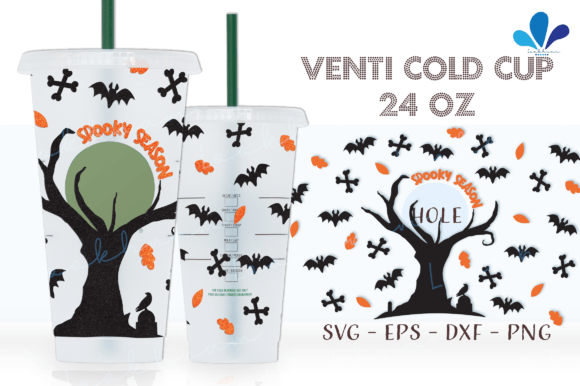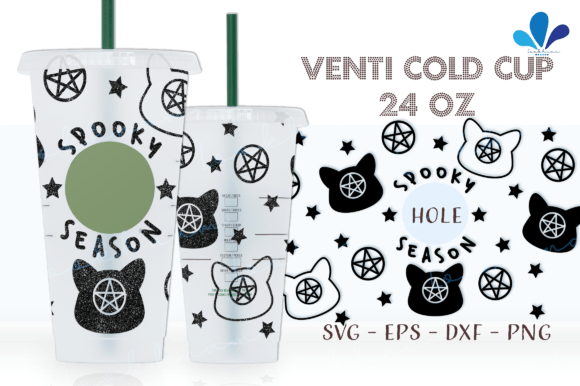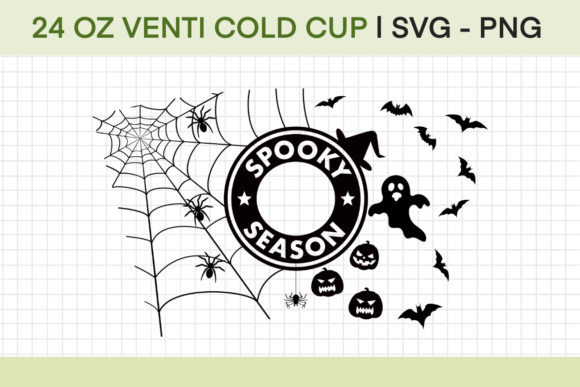
Spooky Season Ghost 24oz Venti Cold Cup Review
I pulled up the Spooky Season Ghost 24oz Venti Cold Cup file late last night, right after a customer asked if I could create a small batch of embroidered tote bags for her Halloween pop-up shop. She wanted something playful but not childish, something that would catch the eye of someone holding a pumpkin spice latte while browsing craft fair tables. The moment I saw the ghost's silhouette, I knew I had to think through every detail before committing to a finished project.
First Impressions of the Ghost Design
The design carries a light, mischievous energy that strikes a sweet spot between spooky and charming. The ghost shape is rounded and friendly, not the draped, ominous figure you see in horror-themed graphics. It has a softness that reads as approachable, which matters a lot when you are stitching onto a product someone will carry around or wear in public. The proportions feel balanced for a 24oz cup template, with the character sitting comfortably within the tall vertical space without looking cramped or stretched.
What I noticed immediately is the clean silhouette. For a machine embroidery design, a readable outline is everything. When you shrink a design down to fit a patch or a baby onesie, complex interior cuts can turn into visual noise. This ghost holds its shape well even when I mentally scaled it down to about four inches wide. The rounded edges and open interior spaces suggest it would digitize cleanly, with room for satin stitch borders and smooth fill stitch areas.
Translating a Vinyl Graphic Into Stitch
The product listing provides a PNG and an SVG file, with a recommended vinyl size of approximately 11.034 inches wide by 6.773 inches tall. It is built for Silhouette and Cricut cutting machines, which places it firmly in the Graphics category. But I look at every graphic through an embroidery lens. The question is never just whether the artwork looks good on screen. It is whether the shapes, negative spaces, and detail levels will hold up under thread tension, fabric texture, and repeated washing.
Ghost designs with thin, wispy details can become a nightmare in stitch form. Loose threads, puckering, and lost definition are real risks. This particular ghost leans on bold, simple curves, which I appreciate. The facial features, if present, need to be checked carefully. Tiny eyes or a delicate mouth that looks adorable in a vinyl cut can turn into an unreadable blob when stitched at smaller sizes. I always recommend testing on scrap fabric first, especially with a design originally built for adhesive vinyl rather than an embroidery file.
A Spooky Tote Bag That Almost Happened
Let me walk you through the real scenario. My customer runs a small seasonal boutique. She wanted fifteen canvas tote bags with a Halloween theme, something her customers could reuse beyond October. The ghost design felt right because it is festive without being tied to a specific year or trend. I imagined it stitched in a soft cream thread on a charcoal gray tote, with maybe a single orange accent stitch for the eyes.
But before I could promise delivery, I had to think through fabric choices. Canvas tote bags have a textured surface. A fill stitch area that is too dense can pull the fabric and create ripples. A satin stitch border that is too narrow can sink into the weave and lose its crisp edge. I pulled out a similar ghost design from my archive and ran a quick test on a remnant piece of canvas. The lesson was familiar: keep the stitch density moderate, use a quality cutaway stabilizer, and always check how the design behaves on textured fabric before running a full batch.
Where This Design Shines Brightest
After spending time with the Spooky Season Ghost 24oz Venti Cold Cup graphic, I can see several product categories where it would perform beautifully as a finished stitch-out. The tall, vertical layout makes it a natural fit for:
- Tote bag designs with a centered front placement
- Sweatshirt embroidery on the upper back or chest
- Kitchen towels and tea towels for seasonal home decor
- Aprons for Halloween baking enthusiasts
- Pillow covers as part of a cozy throw pillow set
- Custom apparel like long-sleeve tees and hoodies
For baby embroidery and children's items, the friendly ghost expression works well. A onesie with this design stitched in pastel thread would be adorable for an October baby shower gift. The lack of sharp edges or aggressive imagery keeps it nursery-safe and parent-approved.
Products That Demand Extra Caution
Not every blank is a good match for this design. The height-to-width ratio means you need to be careful with hoop size selection. If you are working with a 4x4 hoop, the design will need to be scaled down significantly, and that is where I always pause. Scaling below about 60% of the original can cause fine details to close up, especially in the facial features or any decorative inner lines.
Stretchy fabrics like performance wear or thin jersey tees also require extra consideration. The ghost's smooth curves can distort if the fabric shifts during stitching. A good stabilizer and perhaps a water-soluble topper become non-negotiable on these surfaces. Dark fabrics present another challenge. If the ghost is stitched in light thread, any slight gaps in the fill stitch become glaringly obvious. I test every design on both light and dark backgrounds before offering it to customers, and I recommend the same habit to any Etsy seller or small shop product creator.
Curved surfaces like caps and hats are tricky because the design is vertically oriented. Placing it on a hat front means it may wrap awkwardly around the crown seam. I would reserve this one for flat or gently curved surfaces unless I was willing to do some serious re-digitizing and testing.
Customer Perception and Buyer Trust
When someone picks up a handmade product at a craft fair or scrolls through an Etsy listing, the quality of the embroidery speaks before you do. A poorly stitched ghost with uneven edges or visible underlay threads tells the buyer one thing: this seller cuts corners. The Spooky Season Ghost 24oz Venti Cold Cup design has the potential to stitch out beautifully, but only if you treat it as a starting point rather than a finished embroidery file.
I always tell fellow creative entrepreneurs that the digitizing step is where the magic happens or falls apart. The PNG and SVG files give you the artwork. Turning that into a clean embroidery design with proper stitch density, appropriate underlay, and logical pathing is a separate skill set. If you are new to embroidery, consider having a professional digitizer convert the graphic for you. The investment pays off when your finished product looks crisp and professional.
Commercial Use and Licensing Awareness
Before you stitch this design onto anything you plan to sell, pause and confirm the licensing terms. The listing mentions use with Silhouette and Cricut machines, which is helpful for vinyl crafters. But if you are an embroidery designer or a small business owner planning to sell finished items, you need clarity on whether the files can be used for commercial physical products, digital resale, or both. I never assume. I always check with the seller or review the license documentation before listing a personalized gift or custom apparel item in my shop.
This is not just about legal protection. It is about professional ethics. Fellow makers respect designers who respect intellectual property. A quick message to the seller can save you from a messy situation later, and it builds a culture of trust in the Crafts community.
Practical Embroidery Designer Notes
Over the years, I have developed a mental checklist I run through with every new design. Here is what I would do with the Spooky Season Ghost 24oz Venti Cold Cup before taking it to production:
- Test the design on medium-weight cotton first, then on the actual fabric I plan to use for the final product
- Stitch it in both light thread on dark fabric and dark thread on light fabric to compare contrast
- Check the facial features at actual size under bright light to ensure readability
- Run a wash test on at least one sample to see how the stitches hold up
- Evaluate the design in a black and white mockup to assess shape recognition without color cues
- Review the digitized file's stitch count and pathing to avoid unnecessary trims or jumps
- Confirm the hoop size fits comfortably with at least half an inch of clearance on all sides
These steps take time, but they are what separate a craft business that earns repeat customers from one that fields complaints about peeling threads and crooked designs.
The Ghost That Stays With You
There is something about a well-executed seasonal design that stays in a customer's memory. Someone buys a personalized gift with this ghost on a kitchen towel, and the next year they come back looking for a matching apron. A boutique owner stocks embroidered patch versions of the ghost, and suddenly it becomes a signature item. The Spooky Season Ghost 24oz Venti Cold Cup has that kind of staying power because it is versatile without being generic, and festive without being disposable.
I can see it working on a pillow cover in a cozy reading nook, on a sweatshirt for a family pumpkin patch trip, or on a set of tea towels that a host brings out every October. The design fits the holiday embroidery niche perfectly, and for shops that specialize in commercial embroidery, it could become a reliable seasonal staple.
If you approach this design with patience, test it thoroughly, and digitize it with care, the finished stitch-out will reward you. The ghost's charm translates well from screen to thread, and the vertical layout opens up a range of product possibilities that flat, square designs cannot match. Just remember that the file you receive is a graphic, not a stitch-ready digital embroidery file. The bridge between the two is built with testing, good judgment, and a willingness to adjust until the result feels right in your hands.